Best Gifts for Skiers Who Train at Home UK (Every Budget)
Buying for a skier with a home training setup isn't straightforward. They've likely got their eye on something specific—or they've already bought it themselves. The secret is finding gear that complements what they've got, solves a real training problem, or simply makes their sessions more bearable during winter. Whether they're training for a season, recovering from injury, or just want to stay sharp on the slopes, the right gift matters.
Under £100: Balance, Recovery, and Gadgets
Balance boards (£25–60)
A decent balance board is genuinely useful if they don't already own one. It trains ankle stability and proprioception in ways a slide trainer can't replicate. The Wobble Board or similar 40cm inflatable options from Amazon UK do the job well. Skiers benefit from doing balance work off-slope—especially those working around old injuries. If they've got a slide trainer, they might not need one, so check their current kit first.
Foam rollers (£15–35)
This feels like an obvious gift, but the better ones make a real difference. A proper high-density foam roller handles calf, quad, and IT band work that's essential for skiers spending hours in a crouched position. Trigger Point or Theragun foam rollers cost a bit more but last years. Pair it with a massage ball for pinpoint work on problem areas—skiers almost always have them.
Resistance bands (£20–40)
Cheap or expensive, bands do the job. What matters is thickness and durability. A set with multiple resistance levels lets them add upper-body stability work to slide trainer sessions or balance work. Skiers benefit from anti-rotation exercises and lateral band walks, which bands excel at.
Smart water bottle (£30–80)
Underrated gift. The Hidrate Spark or similar tracks hydration and pairs with their phone. Training at home means they're more likely to forget water between sessions. It's practical and slightly nerdy—skiers doing structured training usually appreciate the data.
£100–400: Equipment That Fills Gaps
Resistance slide trainer mat (£120–250)
If they've got a basic slide trainer without a resistance mat, this transforms the training. It forces deeper edge control, better carving, and improves knee stability under load. Brands like Sklz or Bosu-style options create real training stress that plain sliders can't deliver. This is a serious training tool, not a gadget.
Balance board with rocker base (£80–150)
A step up from simple balance boards. The wobble-plus-rocker action mimics ski edge angles more closely. Brands like Yes4All or Sportneer offer solid versions on Amazon UK. Skiers using these report better edge awareness when they return to the snow. It's worth getting if they don't already have a rocker-style trainer.
Interval timer or dedicated smartwatch (£150–300)
Many home skiers just use their phone timer—which works but isn't ideal if they're sweating or moving quickly. A dedicated interval timer (like the Gymboss) or upgrading to a serious sports watch (Coros, Garmin Epix, Apple Watch Ultra) gives them data on heart rate, strain, and session trends. Skiers training indoors benefit from heart-rate zones because they can't gauge exertion visually like they would on-mountain.
Adjustable dumbbell set (£200–350)
If they're doing lower-body work alongside slide training, adjustable dumbbells (like Powertec or Bowflex) save space and money. Skiers need quad, glute, and posterior chain strength. A set ranging 5–25kg covers most needs without requiring a home gym. Check that they've got space before committing.
£400–800+: The Serious Stuff
Premium slide trainer system (£500–800)
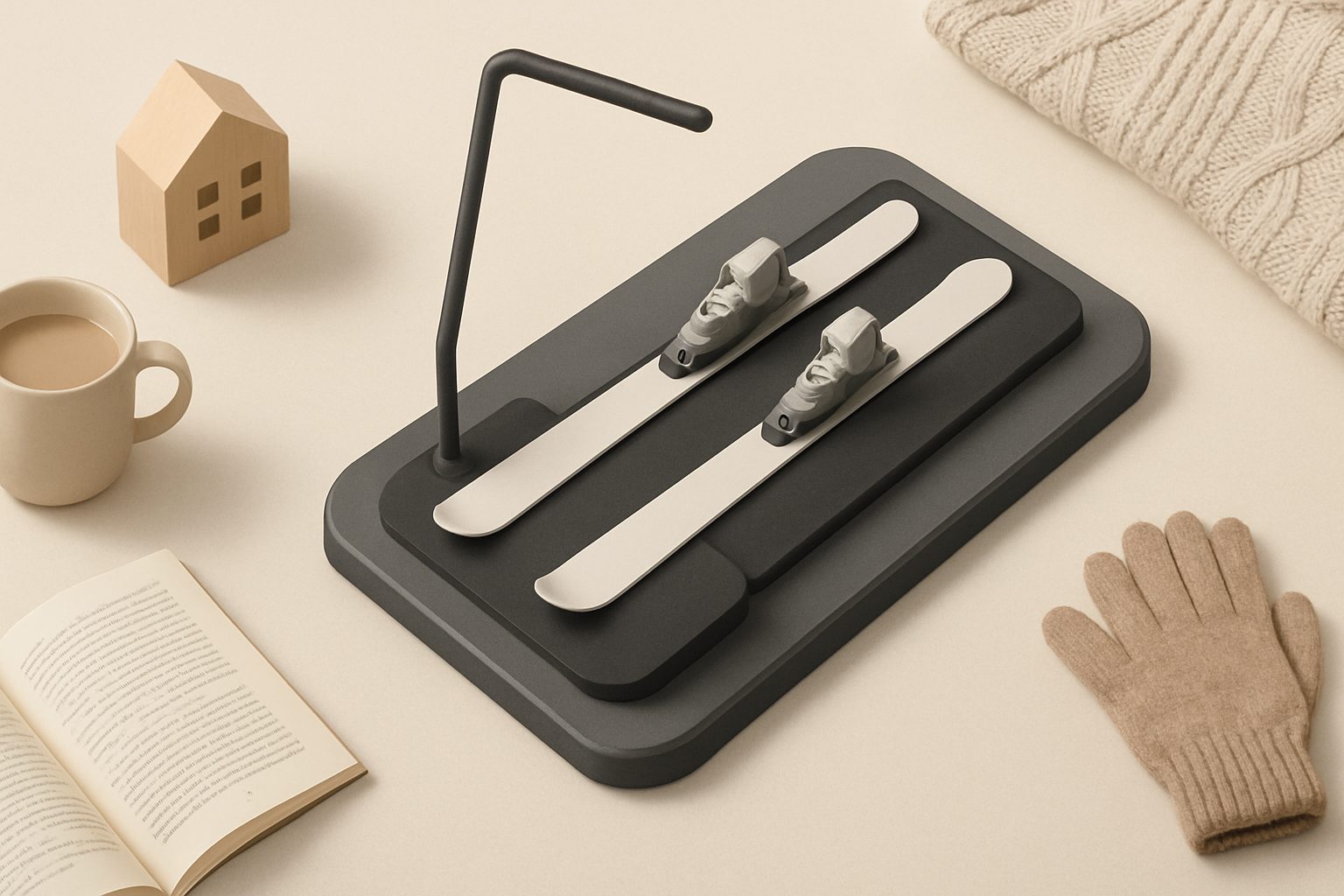
This is the main event. Brands like Powrx, SKLZ ProTrainer, or high-end inflatable options offer adjustable resistance, better surface feel, and durability. Some include digital scoring or app integration. If they're serious about training and don't already have a quality trainer, this is the gift that pays dividends—multiple sessions weekly for years.
Treadmill incline trainer (£400–700)
A dedicated treadmill with high incline capability lets them train skiing in a different way—cardiovascular endurance plus leg-specific work. Not as specific as a slide trainer, but brilliant for conditioning and variety. Brands like NordicTrack or ProForm offer connected options that make sessions less tedious.
Mirror or Reflectix wall mount (£50–150 setup)
Cheap but genuinely transformative. Seeing their form while training is critical. If they don't have a mirror set up already, this is a gap. Skiers train posture, edge angle, and upper-body position—you can't improve what you can't see. Add proper lighting (£40–80) and the whole training space becomes noticeably better.
What Actually Matters
Skip anything that claims to make them a better skier overnight. Skip generic fitness gear aimed at "athletes." What works: tools that address specific gaps in their training (balance, edge control, strength), recovery kit they'll actually use, and gear that makes consistent training less miserable (timers, mirrors, water bottles).
The best gift acknowledges what they're already doing and helps them do it better. Ask a question—or check their Instagram, they'll have posted their setup—to see what's missing.
More options
- Lateral Ski Slide Trainers & Ski Simulator Machines (Amazon UK)
- Ski Balance & Rocker Boards (Amazon UK)
- Ski Fitness Slide Boards (Amazon UK)
- Ski Resistance & Plyometric Training Equipment (Amazon UK)
- Protective Floor Mats for Home Gym / Simulator (Amazon UK)