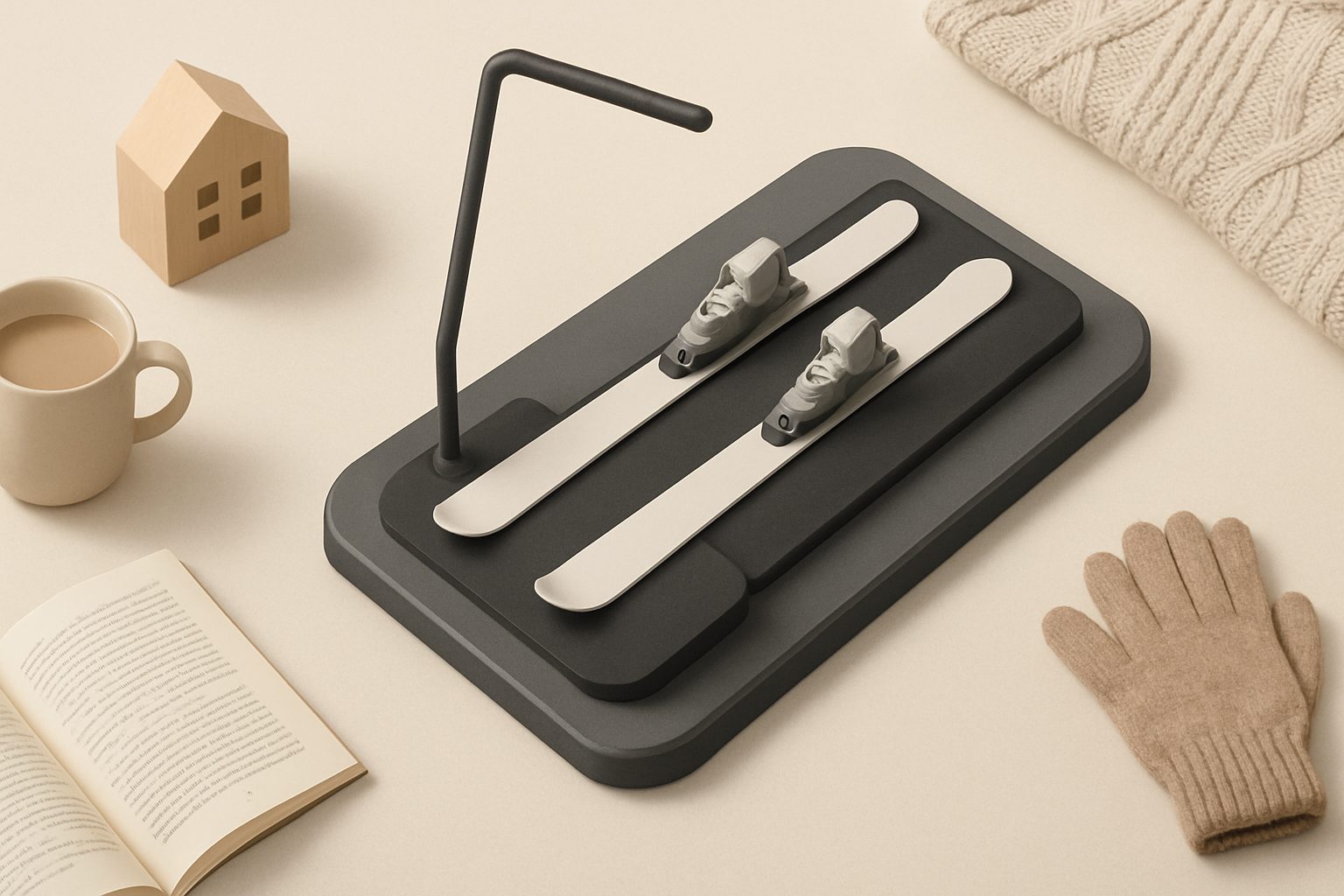
Best Mogul & Carving Ski Simulators for Home Use UK
If you're serious about mogul technique or want to refine your carving between trips to the Alps, a home ski simulator with proper pitch and camber adjustment can genuinely help. The catch is that not all simulators are equally good at both disciplines—mogul work demands responsive edge grip and smooth absorption, while carving practice needs adjustable platform angles to build edge angles and weight distribution patterns. This guide covers machines that actually deliver on both fronts, what to look for, and how to use them effectively.
Why Moguls and Carving Need Different Machine Features
Mogul skiing is fundamentally about rhythm and absorption. Each bump requires you to manage deceleration through flexion while maintaining line. Most budget simulators with fixed decks can't replicate this properly because they lack the vertical compliance a real mogul demands. You end up learning the wrong muscle pattern—tensioning instead of absorbing.
Carving, conversely, relies on sustained edge angle. A machine that can adjust its pitch and camber lets you progressively increase the platform tilt as you build confidence, forcing you to weight the ski properly rather than relying on friction to hold your line. This transfer directly to snow because you're training the exact neural pathway you'll use on-piste.
The best simulators for both have independently adjustable pitch (forward/backward tilt) and camber (side-to-side tilt), plus platforms that offer genuine resistance feedback rather than just sliding friction.
Platform Type Matters for Mogul Work
Rocker-based systems (like some higher-end Skier's Edge models) excel at mogul simulation because the curved base mimics bump absorption. As you flex and extend, the rocker rewards proper timing by smoothly loading and unloading, teaching you the rhythm quickly. The downside is they take up floor space and cost more.
Tilting deck systems are more compact and better for pure carving drills, but struggle with mogul feel unless they're built with genuine articulation in the platform itself. A cheap tilting deck can feel like skiing on ice; a well-engineered one with proper resistance settings can work for both.
Dual-motion hybrid machines (less common in the UK market) combine tilting with some vertical give. These are genuinely versatile but expensive and harder to find locally without importing.
Key Features to Prioritize
Pitch adjustment from flat to 15–20 degrees: You need this to simulate falling-line progression and steeper terrain. Without it, you're locked into one difficulty.
Camber (side tilt) range of at least 10–15 degrees each direction: This is what forces real edge control. A machine limited to 5 degrees won't challenge your carving technique enough to transfer.
Resistance settings or friction control: Adjustable glide resistance simulates different snow conditions (icy to crud) and prevents the simulator from feeling either too grippy or too slippery. Real ski simulators let you dial this; cheap ones don't.
Non-slip binding platform: If your feet move during mogul work, you're learning compensation patterns instead of technique. The platform needs genuine grip, not just a rubber mat.
Technique Drilling on a Simulator
For moguls, focus on rhythm consistency before speed. Set the pitch to simulate the fall line of a mid-difficulty bump run (8–10 degrees), then practice 20–30 second rhythm drills at conversational pace. The goal is smooth flexion and extension, absorbing with your legs rather than your arms. Many skiers default to upper-body tension on a simulator because there's no real impact—counter this by filming yourself and checking that your shoulders stay quiet.
For carving, use progressive difficulty. Start flat, nail your weight transfer mechanics, then increase camber. At 8–10 degrees, you should feel the platform push back if you're not weighting the outside ski properly. This feedback is priceless—it's real-time coaching. Carving simulators are most effective for edge control, weight distribution, and the micro-adjustments you make mid-turn. They're poor for speed management, so don't confuse fast sliding with good carving.
Space and Practical Considerations for UK Homes
Most rocker-based simulators need 2.2–2.5 metres of length and about 1 metre of width. Tilting deck machines are more compact, typically 2 metres by 0.8 metres. If you're in a flat or terraced house, check ceiling height—you need at least 2.1 metres, ideally 2.3, to ski comfortably without crouching.
Noise is underestimated. Cheaper machines squeak and rattle; decent ones are nearly silent. If you're upstairs, mats underneath are essential, and late-night sessions become awkward.
Weight varies. Expect 80–150 kg for a rocker system, 40–80 kg for a tilting deck. Installation is usually DIY, but transport into a typical UK home can be fiddly through narrow hallways and staircases.
Realistic Expectations
A ski simulator complements on-snow training; it doesn't replace it. You'll see real improvement in technique consistency, edge awareness, and rhythm timing within 4–6 weeks of 20–30 minute sessions 3–4 times weekly. Skiers who combine simulator work with actual snow trips improve noticeably faster than those who only ski.
Mogul technique transfers best because the simulator isolates rhythm and absorption without the consequence of an actual fall. Carving transfer is strong too—edge angles trained on a tilting simulator genuinely stick. Where simulators fall short is replicating speed, pressure distribution across variable snow, and the full-body athleticism needed on steeper terrain.
Final Thought
If you're committing to a simulator, buy one with genuine pitch and camber adjustment. Cheap, fixed-deck machines feel like gimmicks after the first month. The best choices for UK buyers that handle both mogul and carving work are mid-range models from established brands—expect to spend £1,500–£3,500 for something genuinely useful. It's a worthwhile investment if you're training seriously between seasons or live far from decent ski terrain.
More options
- Lateral Ski Slide Trainers & Ski Simulator Machines (Amazon UK)
- Ski Balance & Rocker Boards (Amazon UK)
- Ski Fitness Slide Boards (Amazon UK)
- Ski Resistance & Plyometric Training Equipment (Amazon UK)
- Protective Floor Mats for Home Gym / Simulator (Amazon UK)