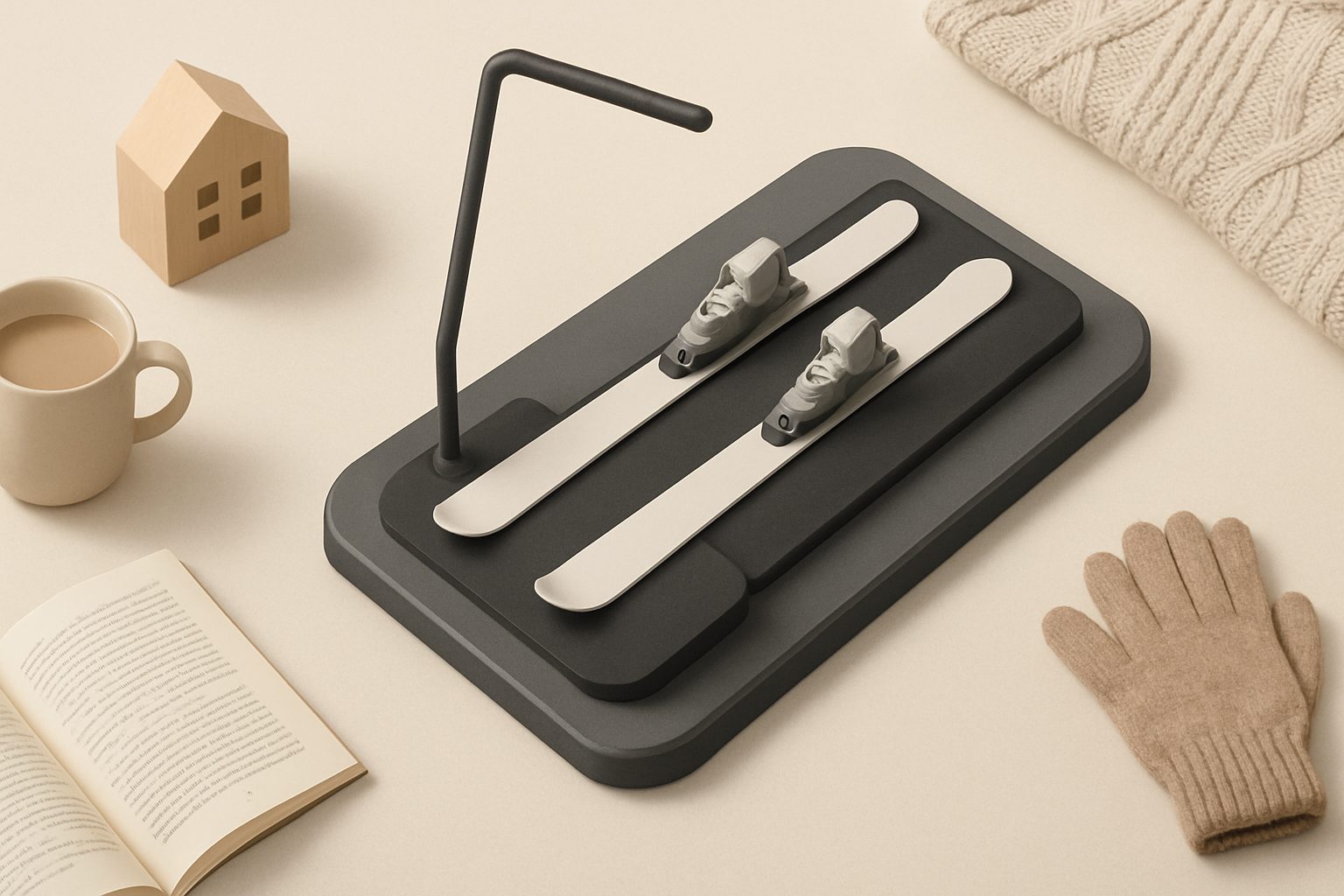
Best Ski Simulators for Kids and Beginners in the UK (2025)
Ski simulators have become an increasingly popular training tool for families wanting to prepare children for winter sports or simply provide engaging indoor exercise during the off-season. Unlike traditional skiing, home simulators offer year-round practice with adjustable difficulty, making them ideal for younger users who are still building confidence and strength.
Why Kids Need Lower-Resistance Simulators
Children typically lack the leg strength and ankle stability of adults, which is why choosing the right simulator matters. A standard full-resistance unit designed for advanced skiers will frustrate a beginner—it demands too much balance control too quickly. The best options for juniors feature gentler spring mechanisms, wider platforms, and movements that aren't abrupt.
Beginner simulators also tend to be shorter (under 2 metres), which reduces the psychological barrier of stepping on. Kids feel less exposed and are more likely to stay on long enough to actually improve. The lower height also makes them safer; when they do fall (and they will), the distance to the ground is minimal.
Balance Boards vs. Full Simulators
Balance boards—oval or circular platforms that rock side-to-side—are the gentlest entry point. They require active balancing but eliminate the forward-and-backward edge-change movement, making them less overwhelming for under-10s. Products like the ALUTECH Pro or Surfer Balance Trainer cost £150–300 and teach lateral weight distribution without creating panic.
Full ski simulators add the forward-backward movement and combined edge control that mimics actual skiing more closely. For kids aged 8+, models with adjustable resistance (two or three speed settings) work well—children can start on the lightest resistance and progress as their core strength improves. Expect to spend £400–900 on entry-level units suitable for younger users.
Age and Weight Guidance
| Age | Suggested Type | Resistance | Platform Length | |---|---|---|---| | 5–7 years | Balance board | N/A | 50–65 cm | | 8–11 years | Balance board or light simulator | Light/Level 1 | 65–100 cm | | 12–14 years | Adjustable simulator | Light–Medium | 100–150 cm | | 15+ years | Standard simulator | Any level | 150+ cm |
These are rough guidelines; individual height and coordination matter more than age alone. A coordinated 10-year-old might manage a light simulator, whilst a less experienced 13-year-old should start with a balance board or the lowest resistance setting.
Weight limits are usually 80–120 kg for kids' models. Always check the manufacturer's spec—overshooting the limit compromises the spring mechanics and creates safety risks.
Safety Considerations
Good simulators come with toe straps or foot platforms that prevent children sliding off during use. Ensure the unit sits on a flat surface and, ideally, on a yoga mat or thin rubber base to reduce noise and improve grip. Encourage kids to hold the optional handle bars (many models include these) during the first few sessions; it builds confidence without compromising balance training.
Placing the simulator in a space with room to the sides is sensible, even though proper foot positioning should keep kids centred. Soft flooring (not hard tile or laminate) reduces impact if they step off awkwardly.
Building a Routine
Start with 10–15 minute sessions, 2–3 times a week. Kids tire faster than adults, and overuse leads to demotivation. The goal isn't to exhaust them but to build ankle and thigh muscle memory in short bursts. Once they're comfortable (usually 3–4 weeks in), increase duration gradually.
Pairing simulator practice with YouTube videos of real skiers or watching ski footage together helps contextualise the movements. Kids who understand why they're practising edge control ski better when they finally hit the slopes.
Common Mistakes
Many parents buy adult simulators hoping the child will "grow into it." This backfires; kids lose interest if the resistance is too high or the platform is too long to find their centre of gravity. Similarly, simulators packed away in a garage gather dust. Keep it visible and accessible in a living space if possible.
Another pitfall is expecting immediate improvement. Balance and leg strength develop over weeks, not days. Celebrate small wins—staying on for 10 seconds longer, achieving better weight distribution—rather than treating it as a fitness benchmark.
Real-World Benefit
Kids who train on simulators even casually do ski better. They understand edge control before their first run, meaning they progress faster on real slopes and feel more confident. That confidence translates into willingness to try steeper runs and advanced techniques. For families planning an annual ski trip, even six weeks of sporadic simulator use noticeably shortens the learning curve.
Verdict
For under-15s and first-time skiers, choose a balance board or light-resistance simulator under 150 cm long. Budget £200–600 for something reliable that won't wobble unpredictably or demand excessive strength. The specific brand matters less than matching resistance and size to your child's age and build. Test the springs before buying if possible—they should require effort but remain predictable, never jerky or chaotic.
Used equipment is worth exploring; many families use simulators intensively for one winter then sell on. Check platforms like Vinted or local Facebook groups for decent savings, though inspect the springs carefully—they wear with age.
More options
- Lateral Ski Slide Trainers & Ski Simulator Machines (Amazon UK)
- Ski Balance & Rocker Boards (Amazon UK)
- Ski Fitness Slide Boards (Amazon UK)
- Ski Resistance & Plyometric Training Equipment (Amazon UK)
- Protective Floor Mats for Home Gym / Simulator (Amazon UK)