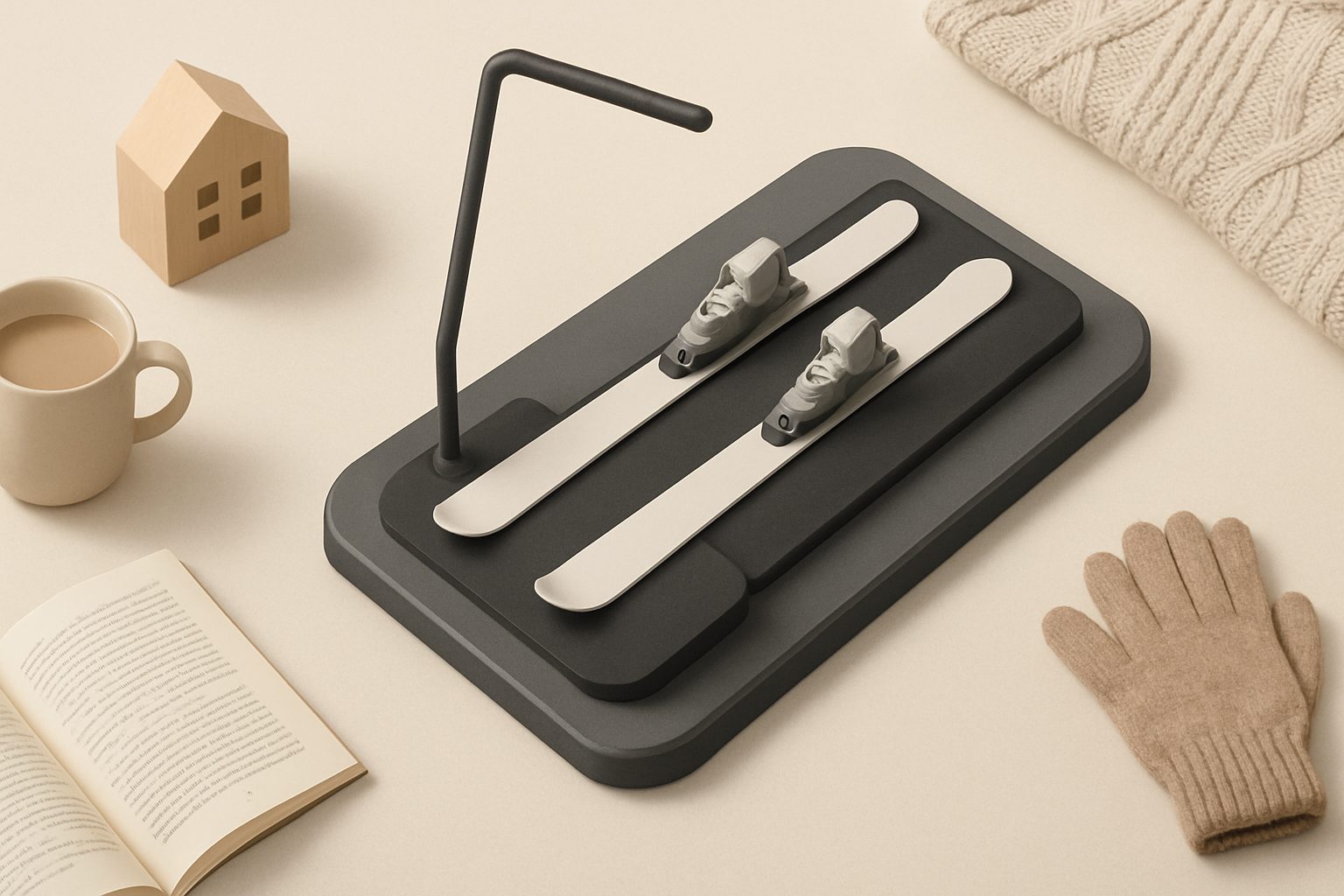
Best Ski Simulators for Racing Training at Home UK
Ski racing at elite levels demands year-round conditioning, but British winters are unpredictable and mountain access is limited. Home ski simulators solve this problem—they let athletes train lateral edge control, mogul absorption, and gate-specific skills during off-season months.
However, not all simulators are equal. Racing athletes need equipment that mimics slalom (SL), giant slalom (GS), and super-G (SG) movement patterns, not just general fitness machines. This guide covers what actually works for racers and what to avoid.
What Racing Athletes Actually Need from Home Simulators
Standard cross-training equipment—treadmills, ellipticals, lateral trainers marketed to gym-goers—misses the point. Ski racing demands rapid lateral weight transfer, edge pressure management, and the ability to load both legs simultaneously under extreme angles. A machine that feels good for cardio often teaches poor movement patterns for racing.
The best simulators for racing either:
- Reproduce lateral forces in a carving plane, matching SL/GS turn geometry
- Allow mogul-style compression and extension, crucial for bumpy terrain in SG
- Permit FIS-style drill patterns, so you can rehearse gate spacing and rhythm
Without these elements, you're training fitness, not skiing technique.
Lateral Edge Trainers for Slalom and GS
Lateral edge trainers are the most common home option. These machines let you move side-to-side on a platform, mimicking the weight-inside, edge-pressure demands of carving turns.
Strengths:
- Builds edge awareness and lateral hip stability
- Lets you rehearse rhythm patterns and timing without going to the mountain
- Compact enough for most UK homes (many fit in a spare bedroom)
- Can drill high-rep sessions in poor weather
Limitations:
- Doesn't fully replicate the forward-back pressure distribution of real skiing
- Lacks the three-dimensional movement of an actual turn
- Can feel repetitive and isolating compared to outdoor training
Quality varies significantly. Entry-level models (under £800) often have loose platforms or poor resistance, leading to sloppy movement. Mid-range options (£1500–£3500) typically have adjustable resistance, height options, and stable platforms—these work well for serious racers.
Premium units add features like pressure-feedback sensors and app integration, letting you track edge load and compare sessions. Useful if you're data-driven, but not essential if you focus on feel and timing.
Mogul Trainers and Carving Machines
For SG and bumpy-terrain conditioning, mogul trainers are indispensable. These machines use rotating pads or tilting platforms to simulate compression and absorption on uneven snow.
Strengths:
- Builds quad and core endurance for mogul absorption
- Forces quick weight transfer and balance adjustments
- Trains the specific fatigue profile of SG racing
Limitations:
- Expensive (typically £2000–£5000+)
- Require more space than lateral trainers
- High impact; not suitable for existing knee or ankle issues
- Limited availability in the UK—most are imported
Some racers combine a lateral trainer with a mogul pad (a portable inflatable or foam surface) rather than buying a full machine. This hybrid approach costs less but demands more creativity in drill design.
FIS-Style Drill Integration
Serious racers use simulators to rehearse specific gate patterns. This requires enough floor space for course-like distances and enough control to adjust resistance quickly between drills.
Look for simulators where you can:
- Adjust lateral width (narrow for tight SL, wider for GS spacing)
- Modify resistance or difficulty mid-session
- Connect to app or video feeds showing course footage
A few premium brands now offer app-synced systems that display gate patterns or course video—you follow the visual cues while training on the simulator. This bridges the gap between home training and actual racing, though the novelty can wear off if drill design becomes repetitive.
Real-World Considerations for UK Athletes
Space: Most lateral trainers require 2–3 metres of clearance and fit under 200cm height. Measure your room before buying; returns for oversized equipment are often complicated.
Noise: Belt-driven machines and mogul trainers generate noise. Neighbours in semi-detached properties or flats may object to hour-long sessions. Rubber mats underneath reduce vibration but don't eliminate sound.
Cost vs. benefit: A £2000 lateral trainer used consistently through winter delivers better results than a £5000 machine gathering dust. Budget what you'll actually use.
Installation and support: Many UK retailers don't stock these machines. You may import directly from European or US brands, which means longer delivery and no local servicing. Check warranty terms and availability of spare parts.
Honest Gaps
No home simulator replaces genuine mountain training. You won't develop the feel for variable snow texture, weather adaptation, or true high-speed edge hold. Simulators are supplements—excellent ones, but not replacements.
They're also not suitable for learning basic technique. Athletes should master fundamental carving and balance on snow before relying heavily on home equipment.
The Bottom Line
Invest in a lateral trainer if you're serious about SL or GS racing and have limited mountain access. Combine it with a mogul pad or inflatable mogul trainer if you race SG. Budget £1500–£3500 for a solid lateral trainer; expect to spend more for mogul-specific equipment.
Pair home training with winter mountain sessions, video analysis of your runs, and coaching feedback. The simulator builds conditioning and rhythm; the mountain teaches adaptability and speed.
More options
- Lateral Ski Slide Trainers & Ski Simulator Machines (Amazon UK)
- Ski Balance & Rocker Boards (Amazon UK)
- Ski Fitness Slide Boards (Amazon UK)
- Ski Resistance & Plyometric Training Equipment (Amazon UK)
- Protective Floor Mats for Home Gym / Simulator (Amazon UK)