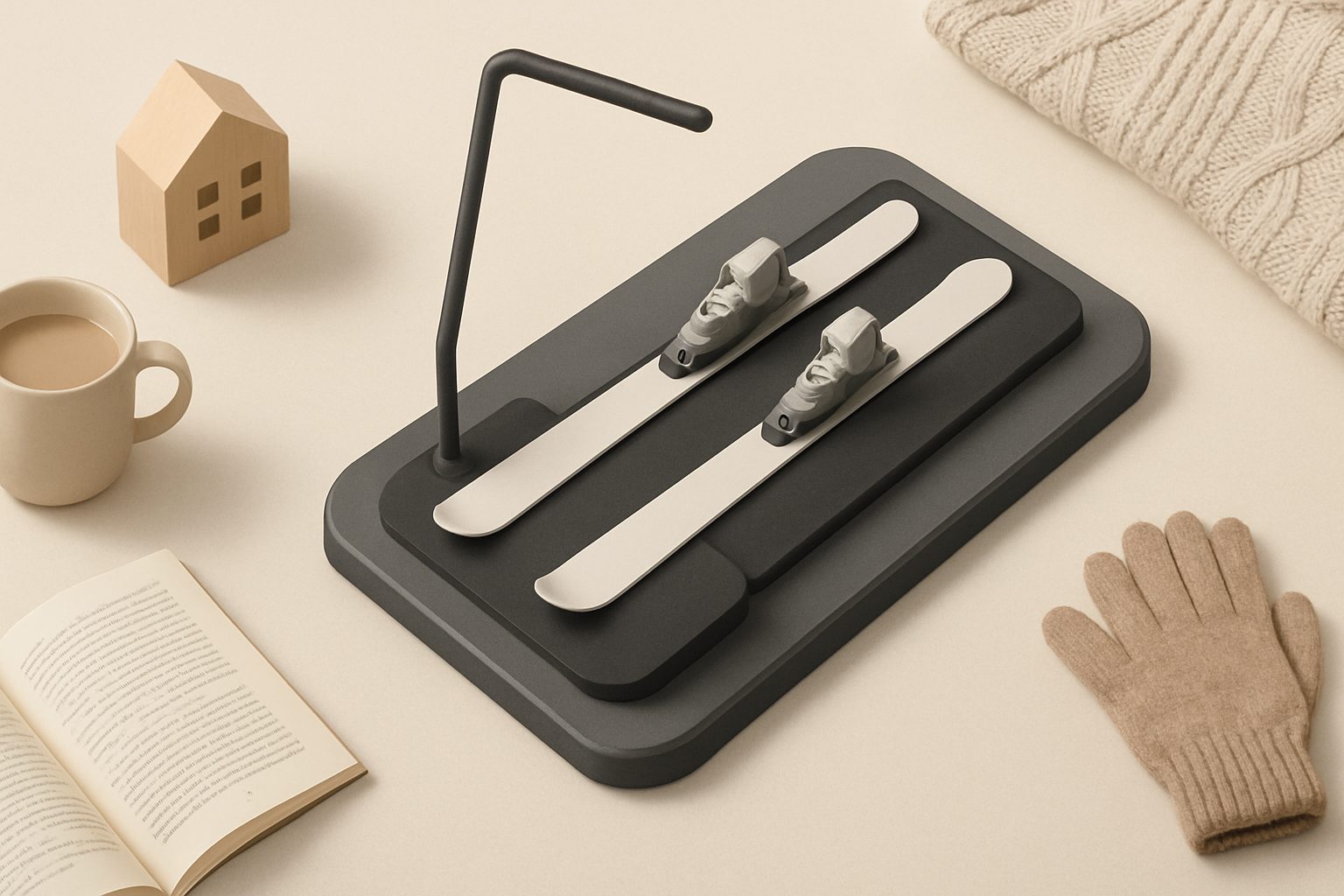
Ski Balance Board Exercises for Beginners: Build Core & Edge Control
Learning to ski hinges on one thing: balance. Without it, you'll spend more time on your backside than enjoying fresh snow. Ski balance boards are one of the most effective training tools you can use at home to develop the stability and edge awareness you'll need on the slopes. If you're starting from scratch, though, a poorly structured routine can be frustrating—or worse, reinforce bad habits.
This guide walks you through a genuine four-week progression designed for absolute beginners. You'll build real core strength and learn how your edges actually work, long before you strap in at a UK ski centre.
Why Balance Boards Prepare You for Skiing
Balance boards aren't just gimmicks. They train three things that matter directly on snow:
Edge awareness. Skiing requires constant micro-adjustments to your edges—the metal strips on your ski bases that grip the snow. A balance board forces you to feel which edge you're on at all times. This proprioceptive feedback translates directly to carving ability.
Core stability. Your core doesn't just give you six-pack abs; it's your anchor. On skis, a weak core means your legs do all the work, you fatigue quickly, and your technique falls apart mid-run. Balance boards demand continuous small movements from your deep stabiliser muscles.
Dynamic weight distribution. Skiing requires you to shift weight between feet and between edges in real time. A balance board teaches this dynamism without the cold, the speed, or the risk of hitting a tree.
That said, balance boards are a training tool, not a substitute for actual skiing. They complement slope time, they don't replace it.
Your Four-Week Progression
Start with these exercises in order. Spend one week on each level before moving up. If something feels easy by day five of a week, you're ready to progress. If you're still struggling on day seven, stay put another week—there's no shame in that.
Week 1: Static Stance and Ankle Mobility
Two-foot stand (5 minutes daily)
Stand on the board with both feet, weight centred. Your goal isn't to stay perfectly still—that's impossible—it's to notice the tiny corrections your body makes. Keep your gaze fixed on a point in front of you. This dramatically improves balance. Do this for five minutes daily, split into two or three sessions if needed.
Single-foot lifts (3 sets of 8 per leg)
Stand on the board on both feet. Slowly lift one foot an inch off the surface. Hold for three seconds. Lower it. Repeat eight times, then switch legs. Rest between sets. This begins to isolate each leg and forces your core to stay engaged.
Week 2: Single-Leg Balance and Edge Shifts
Single-leg stance (3 sets of 30–60 seconds per leg)
Stand on one leg on the board. Keep the other leg extended behind you for balance (like a kickstand). Look ahead, not down. If you fall off, step back on and continue. The goal is total time on the leg, not continuous time. Work up to 60 seconds by the end of the week.
Rocking side-to-side (3 sets of 10)
Stand on the board with both feet. Rock your weight from your left edge to your right edge in slow, controlled motions. Pause for a second on each edge. This teaches edge switching, which is the foundation of all skiing technique.
Week 3: Weight Shifts and Mini Movements
Diagonal weight shifts (3 sets of 12)
Stand on the board. Shift your weight diagonally forward-left, then back-right, maintaining balance throughout. This mimics the dynamic weight transfer required in mogul skiing and steep terrain. Keep the movements controlled.
Single-leg squats (3 sets of 6 per leg)
Standing on one leg on the board, bend your knee slightly (5–10 cm) and straighten. This is harder than it sounds—the board amplifies every instability. Your core and stabiliser muscles work overtime.
Week 4: Combining Movement and Endurance
Flow sequence (two rounds, 2 minutes each)
Alternate between a two-foot stance, single-leg balances (5 seconds each leg), rocking side-to-side, and small weight shifts. This isn't strict—it's about keeping moving continuously whilst maintaining control. Rest one minute between rounds.
Single-leg rocking (3 sets of 8 per leg)
Standing on one leg, rock gently from the heel edge to the toe edge. This combines single-leg stability with active edge switching and is genuinely challenging.
Key Tips for Beginners
Don't grip the board. Let your feet and ankles do the work. If you're holding onto furniture or a wall too much, you're avoiding the instability that makes training effective.
Shoes matter. A flat shoe with a stiff sole (trainers, not running shoes) gives you better feedback than soft soles.
Progress to harder surfaces. Once you're comfortable, try the board on a slightly unstable surface—a folded towel underneath, for instance—or try with your eyes closed for short periods.
Consistency beats intensity. Five minutes daily is better than 30 minutes once a week. Your nervous system adapts fastest to frequent, moderate stimulus.
When to Move Beyond Balance Boards
After four weeks, you'll notice real improvements in single-leg stability and edge awareness. That's brilliant. Now it's time to get on actual skis. Balance boards are maintenance work—do them 2–3 times per week to keep gains—but they're not a substitute for learning to ski on snow.
If you're serious about progressing quickly, look into a proper beginner simulator setup, which adds movement and speed. A good balance board, though, costs a fraction of a simulator and teaches the fundamentals brilliantly.
The Bottom Line
A balance board won't make you a skier in four weeks. But it will build genuine strength and proprioceptive awareness that transfers directly to the slopes. Follow this progression honestly, don't rush the weeks, and you'll arrive at your first lesson with an advantage most beginners don't have.
More options
- Lateral Ski Slide Trainers & Ski Simulator Machines (Amazon UK)
- Ski Balance & Rocker Boards (Amazon UK)
- Ski Fitness Slide Boards (Amazon UK)
- Ski Resistance & Plyometric Training Equipment (Amazon UK)
- Protective Floor Mats for Home Gym / Simulator (Amazon UK)