Ski Simulator vs Ski Treadmill: Which Should You Buy in the UK?
If you're serious about off-season ski training, you've probably come across two very different machines: lateral sliding simulators and ski treadmills. Both claim to improve your technique and fitness, but they work in fundamentally different ways, and which one suits you depends on your goals, space, and budget.
How Lateral Sliders Work
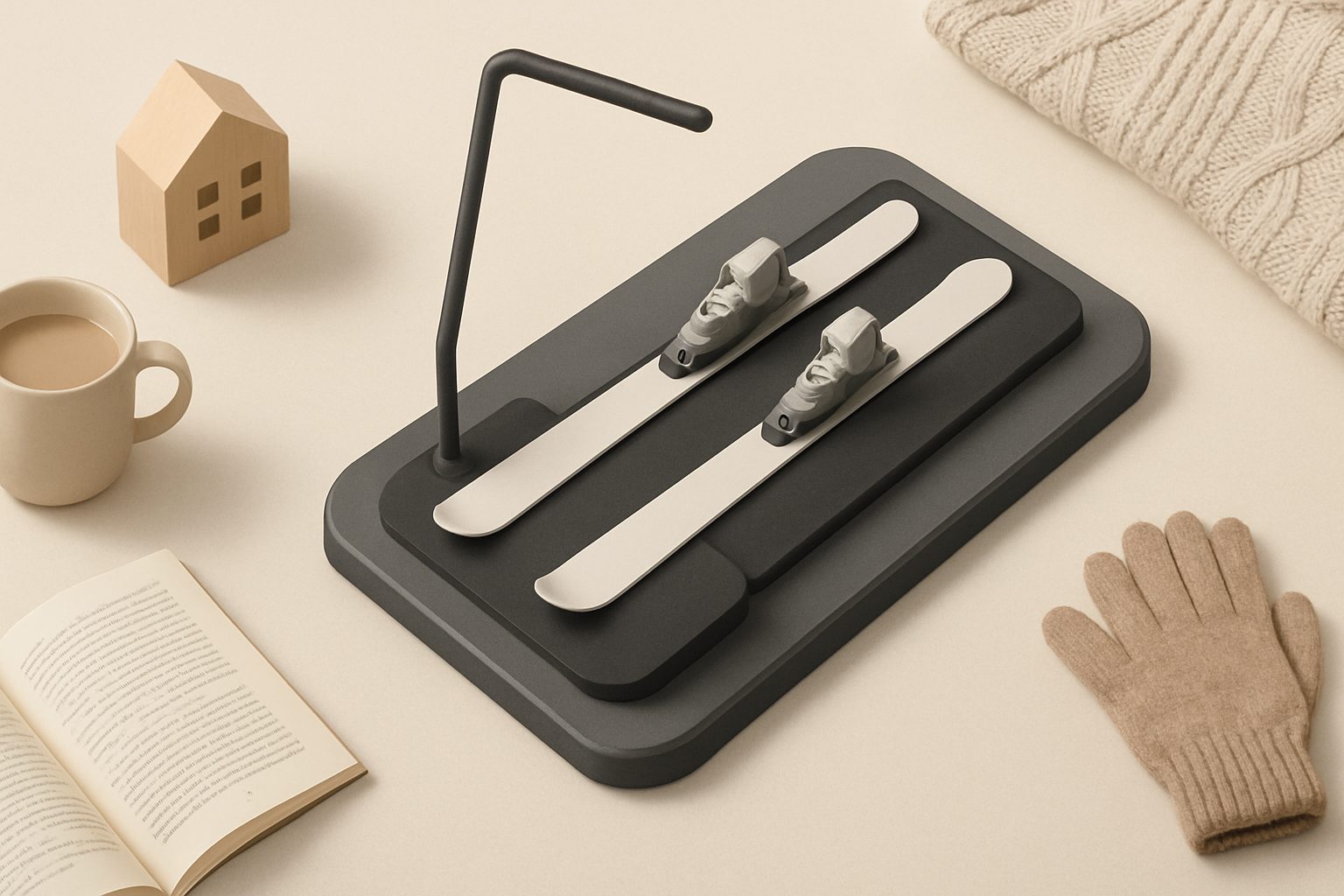
A lateral slider (often called a ski simulator) mimics the side-to-side movement of skiing. You stand on two narrow platforms that slide horizontally on a rail, usually with resistance you can adjust. Your body leans into turns whilst your legs do most of the work, gliding sideways and back again. It's genuinely similar to the edging and weight-shifting in real skiing.
The motion is rhythmic and repetitive. You're not propelling yourself forward; instead, you're shifting your weight to move the platforms side to side, much like you would on a slope. Most lateral sliders have handles or bars you can hold onto for stability.
How Ski Treadmills Work
A ski treadmill is more like a hybrid between a running treadmill and a rowing machine. Your feet stay fixed whilst a belt or platform moves underneath you, simulating the forward motion of going down a slope. Your legs flex and extend, mimicking the up-and-down movement of mogul or off-piste skiing. Some models also incorporate arm movement via poles, similar to proper skiing.
The main difference is vertical rather than lateral. Whilst a lateral slider emphasises sideways balance and edging, a ski treadmill focuses on leg strength, shock absorption, and the repetitive flexing motion your quads endure on steeper terrain.
Key Differences
Training stimulus and specificity
Lateral sliders train the exact movement pattern you use when carving turns—weight distribution, edge control, and dynamic balance. If you ski on groomed runs and value technique, a lateral slider is more sport-specific.
Ski treadmills excel at building leg endurance and explosive power. They're better for skiers who descend moguls, off-piste terrain, or very steep runs where constant shock absorption matters. They're less about technique, more about conditioning.
Cost
This is where lateral sliders dominate. A decent home lateral slider costs £800–£2,500, depending on build quality and resistance mechanisms. Ski treadmills are noticeably pricier: expect £2,500–£6,000+ for a solid model. If budget is tight, a lateral slider gives you more bang for your pound.
Space requirements
Lateral sliders are compact. Most measure around 1.5–2 metres long and take up minimal floor space—think of a small treadmill footprint. Ski treadmills are bulkier and heavier, needing a dedicated corner of your garage or gym. If you're in a flat or working with limited space, a lateral slider fits better.
Learning curve and comfort
Lateral sliders have a steep initial learning curve. Your first session feels awkward; you're relearning balance in an unfamiliar plane. Most people take 2–4 weeks to feel genuinely comfortable. Once you adapt, though, the movement becomes intuitive and closely mirrors real skiing.
Ski treadmills are more intuitive to start with—anyone who's run on a treadmill can step on and begin. However, the repetitive impact can be tiring, and the motion doesn't always feel natural to experienced skiers who are used to carving.
Impact and injury risk
Lateral sliders are low-impact on your knees and ankles. The sliding motion doesn't involve pounding or sudden shock, making them gentler on joints.
Ski treadmills deliver higher impact, especially if you're working hard. Your knees absorb repeated stress. If you have any existing knee issues or are returning from injury, a ski treadmill requires more caution. That said, they're not dangerous if you build up gradually.
Year-round use
Both machines work well for off-season training, but lateral sliders keep you sharp on technique—essential if you only ski a few weeks annually. Ski treadmills build raw conditioning that carries over to any sport.
Which Should You Buy?
Choose a lateral slider if you:
- Prioritise technique and want to maintain your carving ability
- Have limited space or budget
- Prefer low-impact exercise
- Ski primarily on piste or groomed terrain
- Want a machine that feels closest to actual skiing
Choose a ski treadmill if you:
- Want to build maximum leg strength and endurance
- Ski moguls, off-piste, or very steep runs
- Have space and can stretch your budget further
- Enjoy high-intensity interval training
- Already have solid technique and want raw conditioning gains
The honest answer: For most UK home skiers, a lateral slider offers better value and a more authentic training stimulus. They're cheaper, smaller, and teach you the movement pattern you'll actually use on the mountain. Ski treadmills make sense if you're a serious athlete chasing leg power or if you ski demanding terrain where pure endurance matters more than technique.
If you're really committed, some people buy both—a slider for technique work during summer and a treadmill for winter conditioning blocks. But if forced to choose one, start with a lateral slider.
More options
- Lateral Ski Slide Trainers & Ski Simulator Machines (Amazon UK)
- Ski Balance & Rocker Boards (Amazon UK)
- Ski Fitness Slide Boards (Amazon UK)
- Ski Resistance & Plyometric Training Equipment (Amazon UK)
- Protective Floor Mats for Home Gym / Simulator (Amazon UK)